Compliance
The $250,000 Signature: A CMMC Cautionary Tale
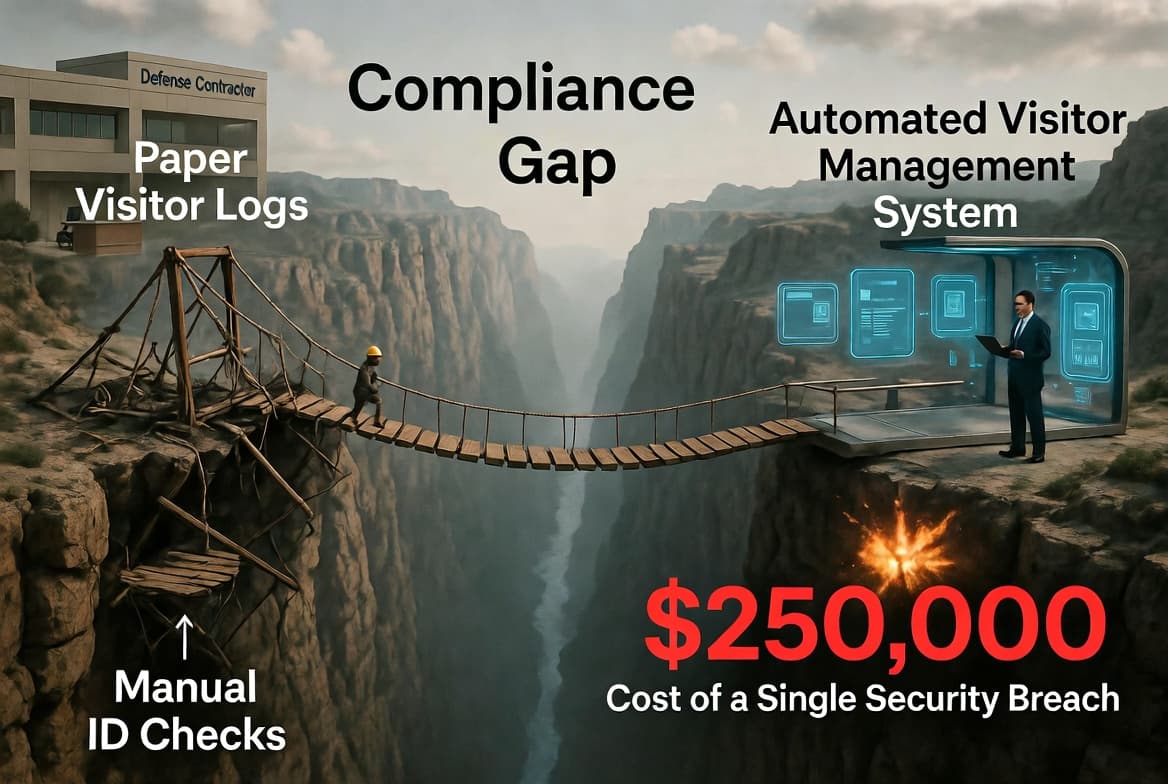
The CEO of "Precision Aero" thought they were ready. Then the auditor asked one question. A cautionary tale about Visitor Management compliance gaps.
Feb 6, 2026
Read6-minute read

The era of viewing compliance merely as a bureaucratic hurdle is ending. For defense contractors in 2026, it is the key to unlocking new business.
Recent industry insights confirm a significant pivot: compliance teams are no longer expected to block innovation but rather to facilitate growth through strategic risk management.
As procurement requirements become more stringent, companies that master compliance are winning more bids, retaining key contracts, and outpacing competitors who still rely on legacy, reactive processes.
The regulatory landscape is tightening rapidly heading into 2026. Two major shifts are driving this transformation:
General Services Administration (GSA) contracts are increasingly adopting Cybersecurity Maturity Model Certification (CMMC) standards. This push means that what was once specialized DoD criteria is becoming the baseline for broad federal procurement. If you aren't CMMC-ready, your bid may be disqualified before it's even read.
Beyond CMMC, supply chain security, export controls (like ITAR/EAR), and continuous risk monitoring are becoming non-negotiable clauses in new awards. Defense contractors must prove active vigilance, not just pass a point-in-time audit.
In a heightened security environment, digital defenses are only half the battle. Physical security, audit evidence readiness, and robust visitor management have emerged as critical components of a holistic compliance strategy.
When an auditor examines compliance posture, they look at who has access to facilities where sensitive data (like CUI or ITAR-controlled technical data) resides. Manual logbooks are no longer sufficient. Contractors must demonstrate:
To transition compliance from a cost center to a strategic advantage, leaders must modernize their approaches. Here are actionable steps to take immediately:
Stop chasing down records. Implement systems that automatically capture timestamps, screening results, and host approvals securely.
Move away from batch, manual checks. Ensure your physical access systems perform instant background checks against current sanctions and exclusion lists.
Break down silos. Ensure policies for facility access align with network access controls, treating physical space as the first perimeter of data security.
Shift away from scrambling before an audit. Use dashboards and automated reporting to maintain a state of permanent audit readiness.
Educate staff that compliance tools are there to speed up safe operations. Empower front-desk personnel and hosts to understand their role in company growth.
Or get it sent to your inbox
About SecurePoint USA
SecurePoint USA helps defense contractors automate physical security compliance, ITAR screening, and audit logging to protect facilities and accelerate growth.
Get weekly insights on sanctions, export controls, and visitor compliance delivered to your inbox.
No spam. Unsubscribe anytime.
Related posts
More guidance on sanctions, export controls, and visitor management for regulated facilities.
The CEO of "Precision Aero" thought they were ready. Then the auditor asked one question. A cautionary tale about Visitor Management compliance gaps.

In regulated industries, compliance confidence often evaporates when auditors arrive. Learn about hidden gaps in sanctions, visitor screening, and audit trails.

As the 2026 CMMC deadlines approach, manual visitor logs and basic badge systems are becoming 'quiet killers' of audits. Here's how to turn a common failure point into an audit strength.